
Grittleton Lodge — A History
A Living Piece of Bunbury's Story
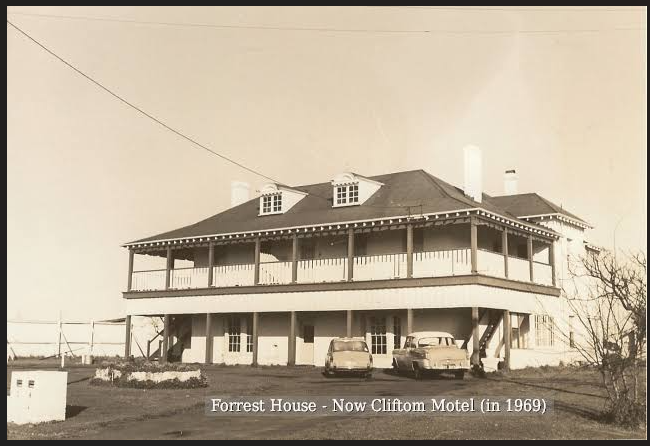
Standing at the corner of Clifton and Molloy Streets, Grittleton Lodge is one of Bunbury's most treasured heritage buildings, and now, as part of The Clifton, it's available to guests who want to sleep somewhere that history has truly touched.
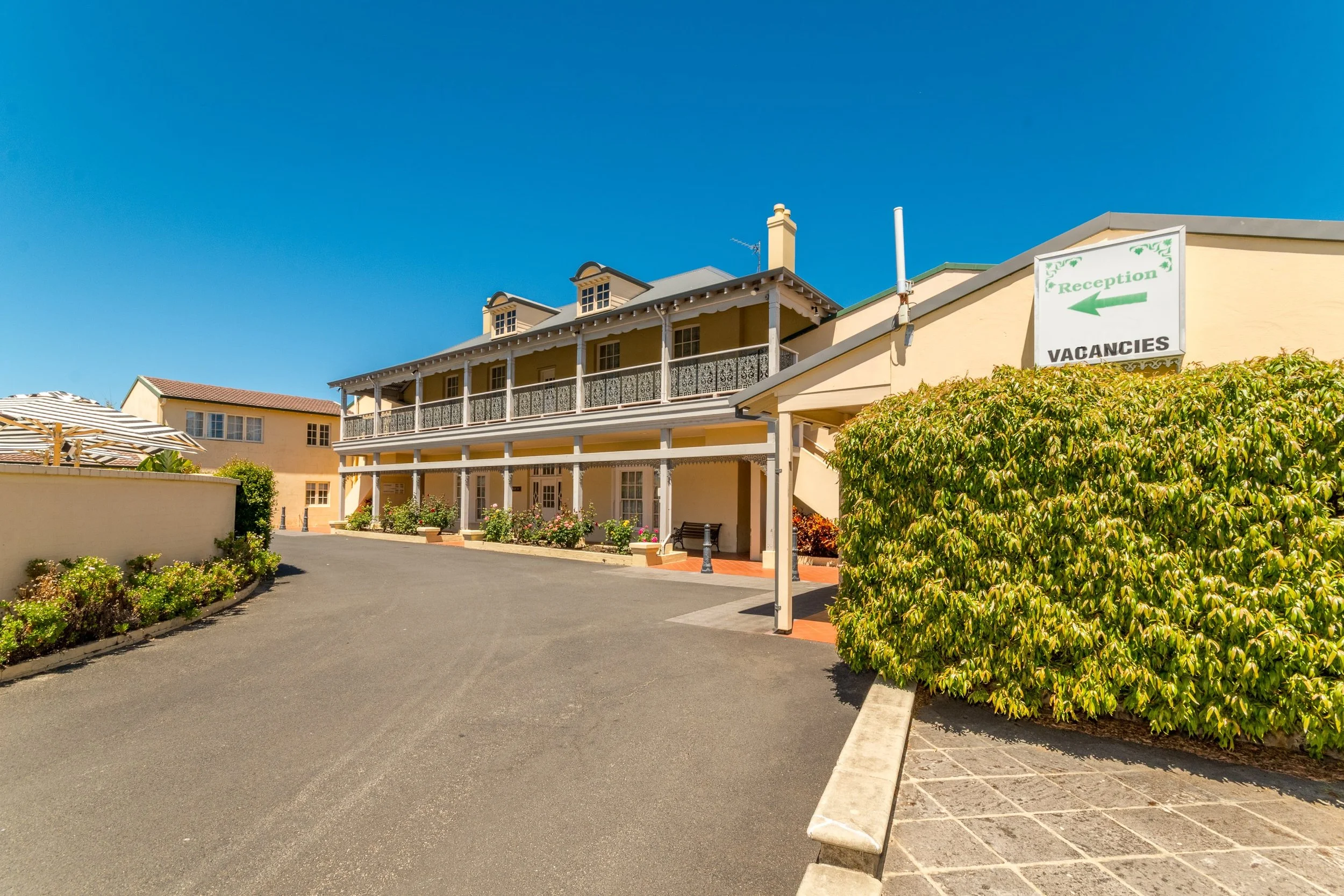
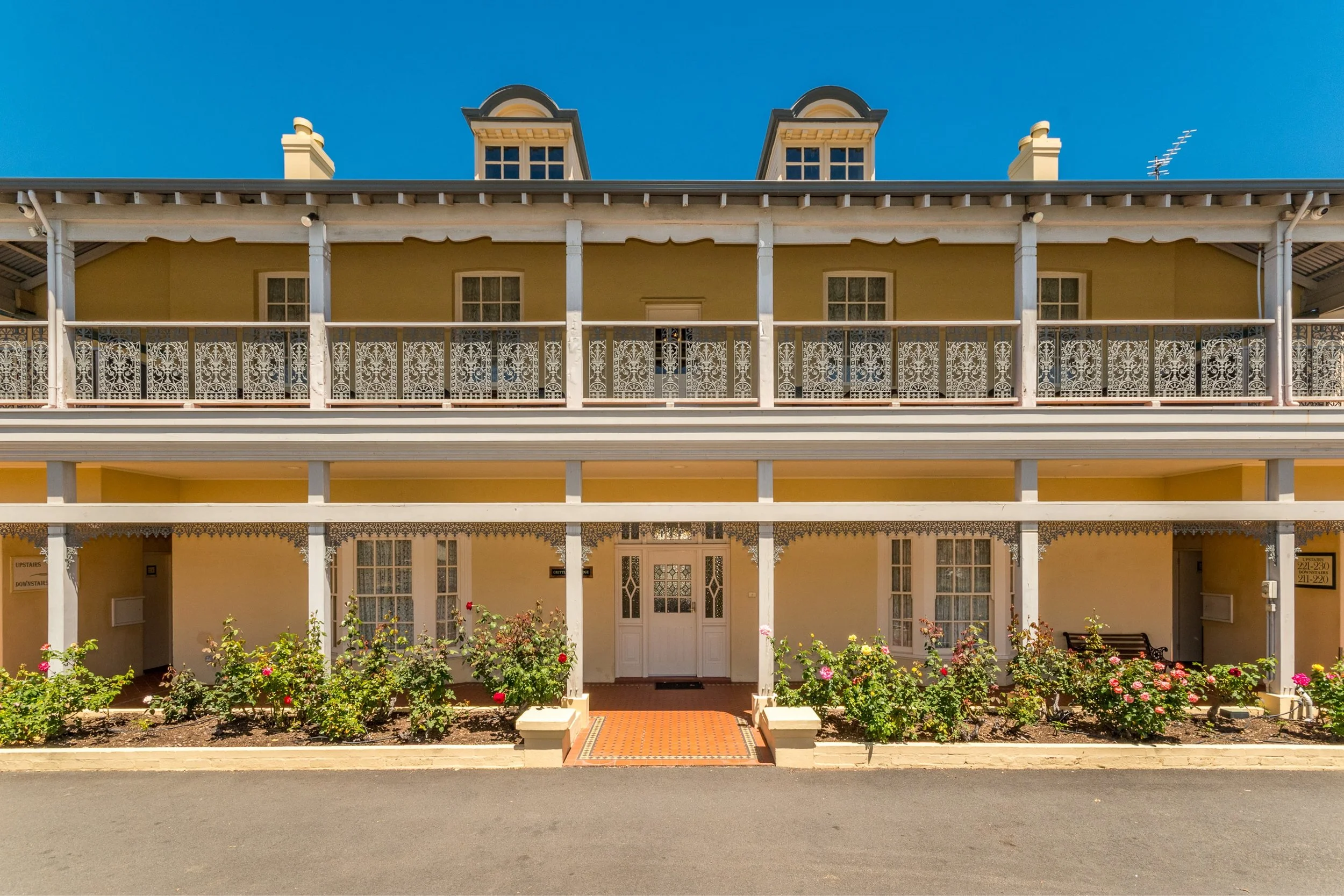
Built around 1885 as a two-storey brick and iron building with a symmetrical facade and two-storey verandahs, the Lodge is a fine example of Victorian Georgian architecture. With its rendered masonry walls, hipped corrugated iron roof, graceful dormer windows, and decorative iron lacework, it remains one of the most striking streetscapes in the city.
The Forrest Family
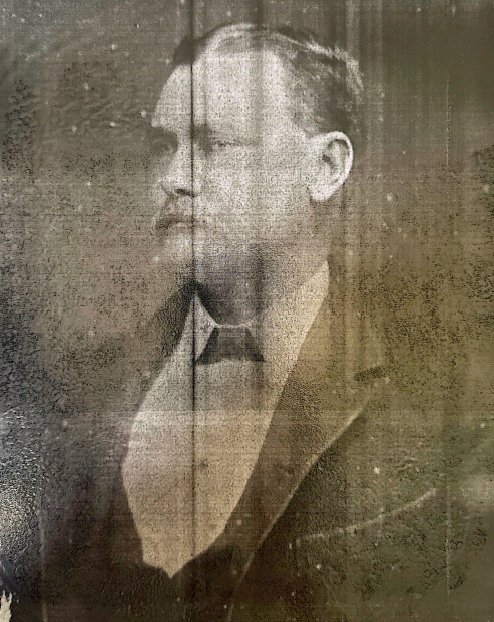
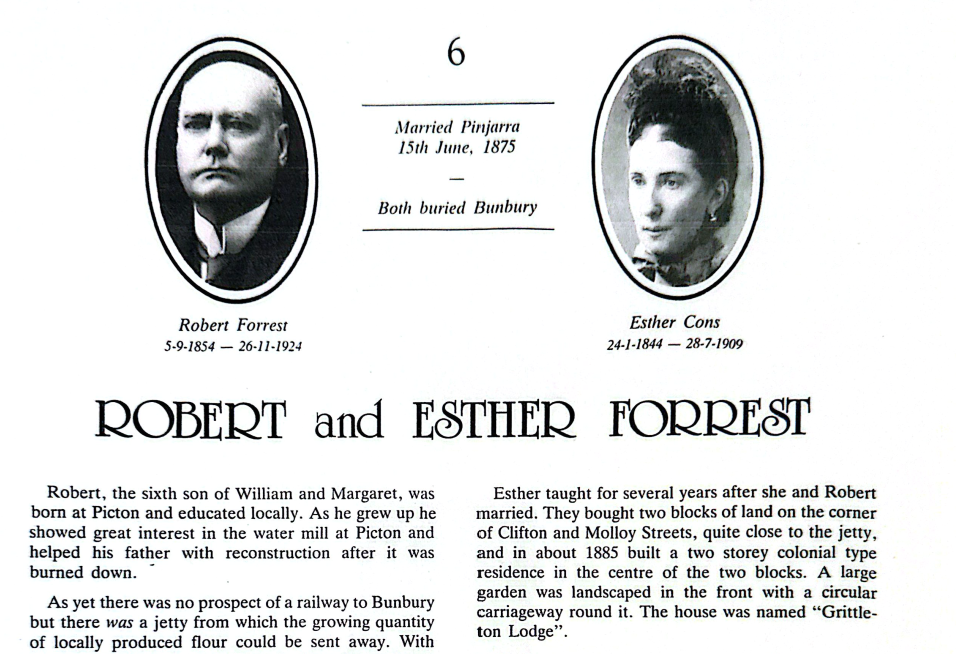
Robert and Esther Forrest bought two blocks of land on the corner of Clifton and Molloy Streets and in 1885 built their two-storey colonial residence there, naming it "Grittleton Lodge." A large garden was landscaped in the front, with a circular carriageway running around it.
Robert's father, William Forrest, was an early pioneer of the Bunbury district who operated the first flour mill in the area. In 1879, Robert and his father established the Koombana Steam Roller Flour Mill, a large two-storey steam-driven building near the Bunbury jetty that would become one of the most important flour mills in the South West. Robert also worked as an agent for mail steamers and the local Inquirer newspaper, and the family were prominent figures in Bunbury's colonial business community.
Robert was one of ten children, and his brothers were no ordinary siblings. John Forrest became Western Australia's first Premier, and Alexander was a noted politician and explorer. John was also the first person born in Australia to enter the British peerage, proclaimed by Queen Victoria as Lord Forrest, Baron of Bunbury. The Lodge was a natural gathering place for this remarkable family.
The Name
The origin of the name "Grittleton" is not definitively recorded. It may be a nod to the village of Grittleton in Wiltshire, England - a common colonial practice of naming homes after British places, though no direct family connection has been established. If you know more about the name's history, we'd love to hear from you.
The Cons Sisters — The Women Behind the Names
The four suites of Grittleton Lodge — Esther, Eliza, Elizabeth, and Robert — honour the people who shaped this house and the wider community around it. Three of those names belong to the extraordinary Cons sisters, whose influence extended far beyond the walls of the Lodge.
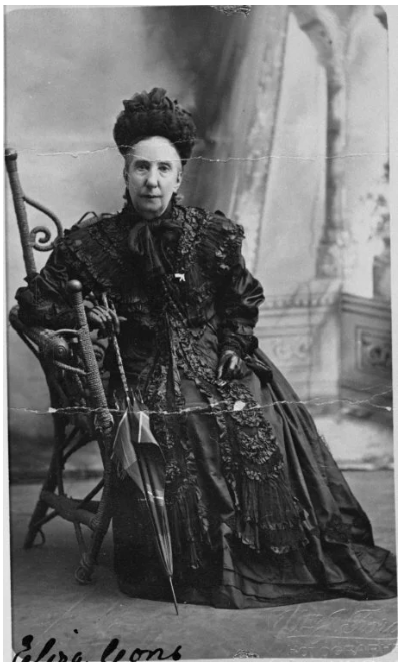
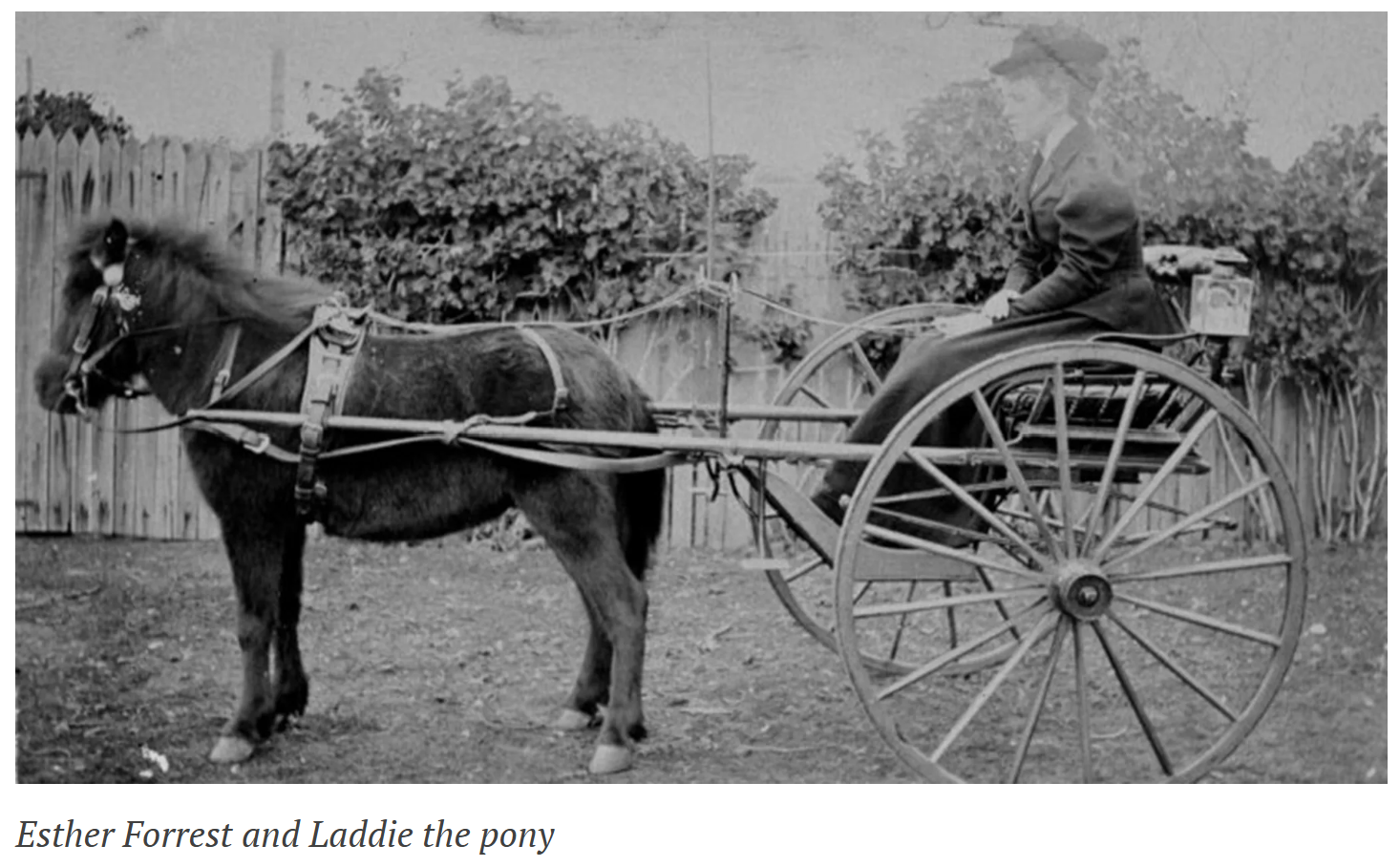
Esther (née Cons) came from a remarkable Anglo-German family in London — her grandfather Elias Konss had emigrated from Germany and changed the family name to Cons. She first went to Melbourne before arriving in Western Australia in 1869, teaching music and languages at a school in Fremantle. In 1872 she arrived in Bunbury and established Torrington College, the first girls' school in the town. She married Robert Forrest in 1875 and made Grittleton Lodge her home, becoming a much-loved civic figure in Bunbury. Esther was a keen horsewoman who was seriously injured in a riding accident, and from that point relied on the support of her sisters. She was also an active civic worker — called upon to unveil the foundation stone of St Patrick's Anglican Church at Rathmines in 1908, and deeply involved in the Women's Christian Temperance Union and the establishment of the Sailors' Rest.
Eliza came to Bunbury in 1888 to help care for her injured sister, and stayed for the rest of her life — becoming one of the most impactful women the town has ever known. She arrived bringing with her Violet and Ray Baylis, the children of their sister Elizabeth, whom Robert and Esther adopted. Eliza, who never married, lived at Grittleton Lodge and cared for the family while throwing herself into the life of the Bunbury community — organising concerts, advocating for the rights of women, providing activities for children, serving on the Wellington Education Board, and looking after the welfare of the sailors visiting the port.
Her most enduring legacy was the Bunbury Sailors' Rest. After years of campaigning and fundraising, the new Sailors' Rest building opened in May 1905. The Mayor of Bunbury praised Eliza directly, saying that she had started in the smallest way and, after the lapse of several years, had succeeded in establishing an institution that was "a credit to Bunbury." Eliza ran the Sailors' Rest until 1920, when aged 78 she handed it over debt-free to the Mission to the Seamen. Her work continues in Bunbury today through the Anglican Diocese's Mission to Seafarers.
In 1999, as part of the Centenary of Women's Suffrage celebrations, Eliza Cons was honoured as one of twelve women who contributed to the Bunbury region.
Elizabeth was the Cons sister who stayed in England and made her mark on the world stage in a very different way. A well-known British opera singer known as Liebe Cons, Elizabeth married another singer, Newton Baylis. Her daughter Lilian Baylis went on to manage the Old Vic Theatre in London, and later acquired the Sadler's Wells theatre. The ballet and opera companies formed under Lilian's management were the foundation of what would later become The Royal Ballet and The English National Opera. Two of Elizabeth's other children, Violet and Ray, came to live with the Forrests in Bunbury — Violet going on to work closely with Eliza at the Sailors' Rest and in the women's suffrage movement.
Across the family, the Cons sisters and their children left a remarkable imprint — on London's cultural and social landscape, and on the streets of Bunbury itself.
Later Years — A House with Many Lives
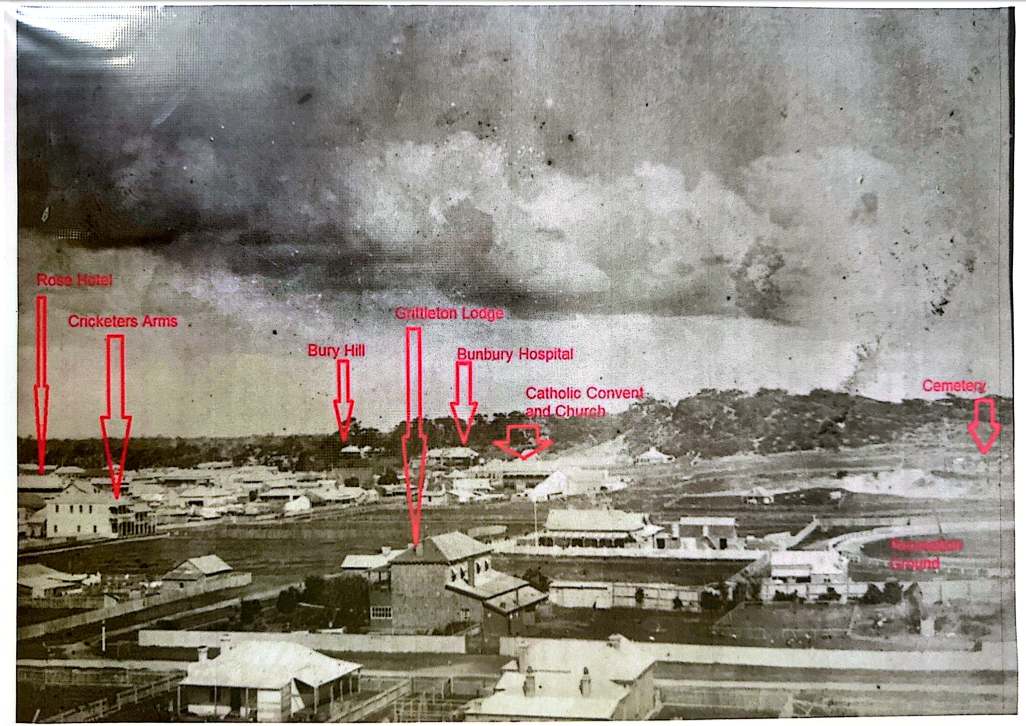
The Forrest’s continued to live in the Lodge until around 1925. By 1931 it was owned and occupied by Louise Illingworth, and by 1941 it had been converted into four flats. The Cassady family acquired the property in 1962, and in the 1970s built the motel wings that flank the Lodge today — establishing The Clifton as one of Bunbury's leading accommodation destinations and transforming what had been a private residence into a thriving hospitality business.
For more than two decades Jim and Janene Cassady and their three children called the Lodge itself home, living in and loving the old building that had been such a central part of Bunbury's story. When the children grew up and left, the Cassadys made a decision that would transform the Lodge's story once more. Rather than rattle around in the two-storey homestead, they threw themselves into a loving restoration — bringing it back to its former grandeur and opening it to guests. As Jim Cassady told The West Australian in 1998: "It's much more personal than a hotel — and we get some wonderful comments about our staff."
The restoration was meticulous — walnut dressers, French clocks, leather chesterfields, silk drapes, and gilt mirrors were brought together to create interiors that transported visitors back to the Victorian era. Each of the four suites was given private marble bathrooms with spa baths, open gas-burning fireplaces, and monogrammed towelling robes. The music room and lounge, filled with family heirlooms and an antique grand piano, completed the picture of a gracious colonial home brought back to life.
Alongside the Lodge, Louisa's Restaurant — run by the Cassadys in partnership with acclaimed chef Neil Jackson — became one of Western Australia's most celebrated dining destinations, winning the Gold Plate Award every year from 1990 to 1997 and taking the WA award for Fine and Occasional Dining. The combined property won an extraordinary run of tourism honours, including Australian Tourism Awards in 1992, 1993 and 1997, Western Australian Tourism Awards Hall of Fame recognition in 1996, and the national superior accommodation category at the 1997 Australian Tourism Awards.
The Cassady family sold the property in 2005, and the Lodge has continued as a cherished part of The Clifton Motel ever since.
Heritage Listed
Grittleton Lodge is recognised on the State Heritage Register for its cultural heritage significance as a substantial example of Victorian Georgian architecture, for its landmark qualities, and for its contribution to Bunbury's streetscape and the community's sense of place.
Now Part of The Clifton Motel
Today, Grittleton Lodge sits within the grounds of The Clifton Motel, offering guests a rare opportunity to stay in a piece of living history. With four private suites, spacious drawing rooms, and a balcony, the Lodge is particularly well suited to group bookings and special occasions. Whether you're celebrating, escaping, or simply curious about the stories these walls hold — we'd love to welcome you.
References & Further Reading
The history on this page has been drawn from the following sources, which we gratefully acknowledge:
State Heritage Office of Western Australia — inHerit Register Grittleton Lodge, 2 Molloy Street, Bunbury. inherit.stateheritage.wa.gov.au
Streets of Bunbury — Eliza Cons (1842–1924) Research by Gaye Englund for the Streets of Bunbury project, a Museum of Perth initiative. streetsofbunbury.com/eliza-cons
Robert and Esther Forrest — Family History Document Sourced from the Forrest family records; information and photographs courtesy of Verna Glossop, née Properjohn.
The Bunbury Herald and Blackwood Express, 28 November 1924 Obituary: Mr Robert Forrest. National Library of Australia / Trove.
Bunbury Herald, 29 July 1909 Obituary: Mrs Robert Forrest. National Library of Australia / Trove.
The West Australian, 30 July 1998 "In the Lodge of Luxury" — David Hummerston. Travel section.
Visit Bunbury Geographe — Heritage Building Trailvisitbunburygeographe.com.au
Bunbury Mission to Seafarers - https://www.mtsbunbury.org.au/
State Library of Western Australia Historical photographs of Robert Forrest, Esther Cons, and related figures. slwa.wa.gov.au